
Aluminum and its alloys stand among the most widely applied structural metals worldwide, second only to steel in industrial consumption. Benefiting from ultra-low density, natural corrosion resistance, excellent thermal & electrical conductivity, superior formability and full recyclability, aluminum materials dominate aerospace, automotive, construction, electronics and marine industries. This article systematically sorts out the core physical, mechanical, chemical and processing performances of aluminum alloys, introduces mainstream alloy series characteristics, and summarizes their typical industrial application scenarios.
1. Core Physical Properties of Aluminum
1.1 Ultra-Low Density & High Specific Strength
Pure aluminum has a density of only 2.7 g/cm³, roughly one-third of carbon steel (7.85 g/cm³) and copper (8.96 g/cm³). Though pure aluminum features low raw strength, alloying with Zn, Mg, Cu, Si plus heat treatment dramatically boosts tensile strength. High-strength aerospace 7075-T6 alloy reaches tensile strength over 570 MPa, delivering a far higher strength-to-weight ratio than ordinary steel. This lightweight advantage drastically cuts vehicle weight, lifts fuel efficiency and expands payload capacity for aircraft and new energy vehicles.

Aluminum extrusion profiles
1.2 Excellent Thermal & Electrical Conductivity
Aluminum’s thermal conductivity reaches ~235 W/m·K, and its electrical conductivity hits 61% of copper’s standard value by equal cross-section. Calculated by equal weight, aluminum conducts over twice as much electricity as copper. These traits make aluminum the preferred material for radiators, LED heat sinks, power transmission cables and motor housings. Meanwhile, aluminum reflects 92% visible light and 98% infrared radiation, widely used for reflective lamp shells and thermal insulation panels.
1.3 Non-Magnetic & Low Melting Point
Aluminum owns near-zero magnetic permeability, creating no electromagnetic interference, suitable for medical equipment, precision electronic enclosures and signal sensing devices. Its melting point of 660.3°C supports simple casting, die-casting and extrusion forming, lowering manufacturing difficulty compared to refractory metals.
2. Mechanical Performance: Strength, Ductility & Machinability
Aluminum owns a face-centered cubic (FCC) crystal structure with multiple slip planes, granting outstanding ductility and cold forming capacity. Pure annealed aluminum achieves elongation up to 30%–40%, capable of deep drawing, bending, rolling and foil processing.
Two mainstream strengthening methods define aluminum alloy grades:
- Strain hardening (non-heat-treatable alloys: 1000, 3000, 5000) Hardness and strength rise via cold rolling or stamping, with stable corrosion resistance and great weldability, ideal for sheet metal, marine structures and architectural panels.
- Precipitation hardening (heat-treatable alloys: 2000, 6000, 7000) After solution treatment and artificial aging, tiny precipitates block dislocation movement to multiply strength. 6061-T6 (Al-Mg-Si) balances strength and corrosion resistance for construction extrusions; 7075-T6 (Al-Zn-Mg-Cu) serves high-load aerospace structural parts.

Tensile strength comparison of common aluminum alloys
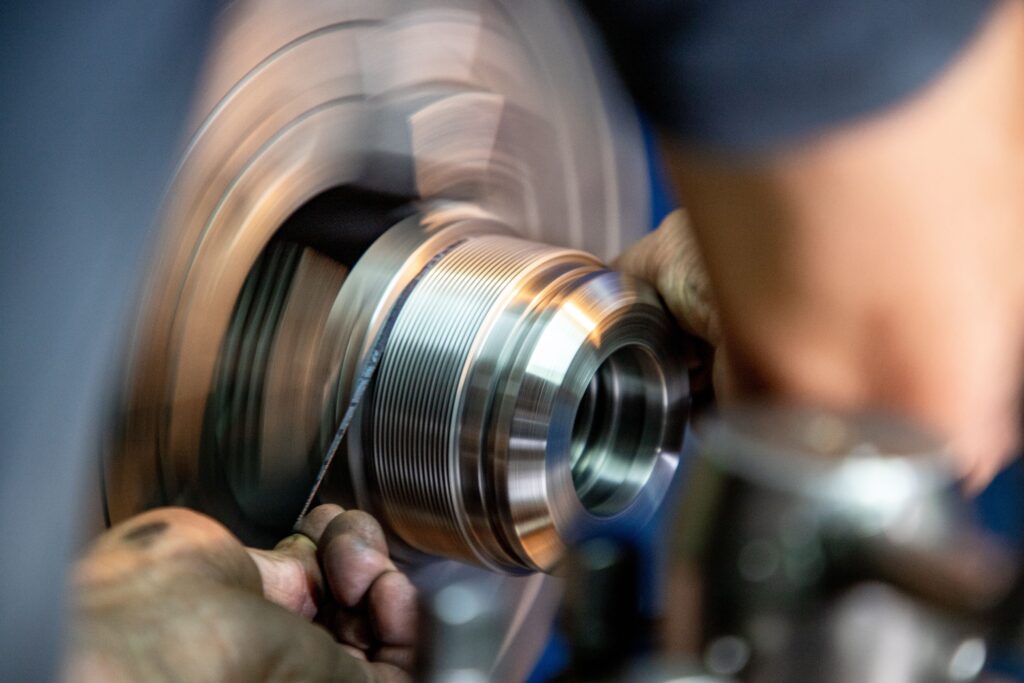
Aluminum also boasts easy machinability: high cutting speed, smooth chip removal and precise dimensional control, perfect for CNC auto parts and precision hardware.
3. Chemical Property: Natural Self-Protective Corrosion Resistance
Aluminum is chemically active, yet a compact, self-repairing Al₂O₃ oxide film (2–10 nm thick) instantly forms on its surface upon air contact. Unlike rust that peels off steel, this transparent oxide layer tightly adheres to the substrate and re-generates immediately if scratched, isolating internal metal from oxygen, moisture and salt mist.
5xxx Al-Mg alloys deliver top-tier seawater corrosion resistance, widely adopted for ship hulls and offshore platforms without heavy anti-rust coatings. Surface anodizing further thickens the oxide film to hundreds of microns, enhancing wear resistance and enabling colorful decorative finishes for consumer electronics and architectural profiles.
4. Processing & Environmental Performance
4.1 Diversified Forming Capacity
Aluminum adapts to nearly all metal forming techniques: extrusion for hollow building profiles, die casting for automotive engine blocks, forging for high-strength wheel hubs, stamping for auto body sheets, and rolling for thin packaging foil. It supports welding, riveting, bonding and mechanical assembly with high compatibility.
4.1 Ultra-High Recyclability & Eco-Friendly
Aluminum recycling only consumes 5% of the energy needed for primary electrolytic production, with over 95% recycling rate worldwide. Recycled aluminum retains identical mechanical and chemical properties as virgin ingots, forming a closed-loop circular economy. Non-toxic and pollution-free, aluminum is safe for food packaging, medical instruments and household supplies.
5. Performance Comparison of Main Aluminum Alloy Series
表格
| Alloy Series | Core Alloy Elements | Core Performance Advantages | Typical Applications |
|---|---|---|---|
| 1000 | Pure Al | Highest conductivity, ultra corrosion-resistant, soft formable | Power cables, heat sinks, packaging foil |
| 3000 | Al-Mn | Medium strength, excellent corrosion resistance | Kitchen utensils, building panels |
| 5000 | Al-Mg | Outstanding seawater resistance, great weldability | Ships, auto fuel tanks, pressure vessels |
| 6000 | Al-Mg-Si | Balanced strength & corrosion resistance, easy extrusion | Architectural profiles, auto frames |
| 7000 | Al-Zn-Mg-Cu | Ultra-high tensile strength | Aircraft fuselage, aerospace structural parts |
6. Industrial Application Scenarios Driven by Aluminum’s Superior Performance
- Aerospace: Lightweight high-strength 7000 alloys cut aircraft weight, reduce fuel consumption and increase flight range;
- New Energy Automobile: 6000/5000 aluminum car bodies, battery trays and wheel hubs realize vehicle lightweighting;
- Construction & Decoration: Anodized 6063 extrusion profiles for doors, windows and curtain walls with long service life;
- Electronics & Heat Dissipation: 1000 aluminum heat sinks for mobile phones, computers and new energy charging piles;
- Marine Engineering: Anti-corrosion 5083 aluminum for yachts, offshore equipment and seawater pipelines.